Sunday, May 19, 2013

The Feast of Pentecost with The Rite of Confirmation

Pentecost - contemporary

(Audio)

John 14:23-31; Acts 2:1-21; Genesis 11:1-9

In the Name of the Father and of the + Son and of the Holy Spirit.

The Feast of Pentecost is about the Word of God in opposition to the word of man, the devil, or anyone else. It is the effective undoing of the curse of Babel, when God confused the languages of self-centered man so that peoples could no longer understand each other nor cooperate in their godless efforts to establish their own hellish version of heaven on earth, with creaturely humanity being their only god. Jesus poured out His Holy Spirit, who proceeds from the Father, upon His Church, just as He promised that He would. And, the Holy Spirit brings to your remembrance all that Jesus has said to you in His Word. The Holy Spirit guides you into the Way, the Truth, and Life – into Jesus. And, He comforts you with the Peace of Jesus, peace that the world cannot give, Peace that comes only from the Word of God made flesh, Jesus Christ.

This is what the Holy Spirit does – He calls you to, He creates in you, and He keeps you in faith in Jesus Christ. Truly, it is as simple as that! And yet, Christians are too often confused about the work of the Holy Spirit and His gifts and His fruits. You are tempted to go immediately to those things that seem the most fantastic and spectacular, thinking them to be of greatest benefit and thus to be most desired – things like speaking in spiritual tongues, healing, visions, and the like. However, what is spectacular to the sinful minds and hearts of men and to your fallen and sin-corrupted senses is of much less importance to our heavenly Father and giver of all spiritual gifts. Furthermore, you must hear the Scriptures and mark that they speak of both gifts and fruits of the Spirit. The Sevenfold Gifts of the Spirit are described in Isaiah chapter eleven: “There shall come forth a shoot from the stump of Jesse, and a branch from his roots shall bear fruit. And the Spirit of the LORD shall rest upon him, the Spirit of wisdom and understanding, the Spirit of counsel and might, the Spirit of knowledge and the fear of the LORD.” This is a Messianic prophecy, fulfilled in the Baptism of Jesus and in His obedient life and ministry, suffering, and death. St. Paul lists the fruits of the Spirit in Galatians chapter five saying, “the fruit of the Spirit is love, joy, peace, patience, kindness, goodness, faithfulness, gentleness, self-control; against such things there is no law.”

Thus, you see, the Sevenfold Gifts of the Spirit refer to Jesus firstly and directly. They also refer to you, not directly, but in and through Jesus. Likewise, the fruits of the Spirit are all selfless, self-sacrificial fruits that, like the Beatitudes in the Sermon on the Mount, most truly and fully describe, not you, but Jesus. Yet, once again, they do describe you in and through Him. In these key passages there is no mention of the more fantastic and spectacular gifts that too many Christians build their faith and religion upon and put their trust in so as to make them idols. However, such gifts are mentioned, most completely by St. Paul in his first epistle to the Corinthians, chapter twelve: “Now concerning spiritual gifts, brothers, I do not want you to be uninformed. […] there are varieties of gifts, but the same Spirit; and there are varieties of service, but the same Lord; and there are varieties of activities, but it is the same God who empowers them all in everyone. To each is given the manifestation of the Spirit for the common good.” Here Paul intends to stress that any and all true spiritual gifts come from the one and only Holy Spirit of God. Moreover, the gifts of the Spirit are to be used for the good of the whole body of Christ, the Church. Therefore, spiritual gifts are by their very nature selfless and self-sacrificial as Paul described them in the epistle to the Galatians. They are gifts, which means that they are not your possession, but they belong to God. You are given stewardship of them to use for the benefit of others to the glory of God. These gifts flow from the Holy Spirit of God in and through Christ Jesus. And, the Holy Spirit works always, and only, through the Word of God and the Holy Sacraments, which are the Word of God attached by His institution, command, and promise to material, visible elements that you may see, touch, taste, and receive upon and into yourself, that you may have true and lasting comfort and peace.

Indeed, the greatest and the most dangerous error that we can make concerning the Holy Spirit is to believe that He works apart from the Word of God. This is simply a lie and a deception of the devil! In what is often considered to be his “last will and testament”, Martin Luther wrote in The Smalcald Articles, which are included in The Book of Concord, the Confessions of the Evangelical Lutheran Church, God does not want to deal with us in any other way than through the spoken Word and the Sacraments. Whatever is praised as from the Spirit—without the Word and Sacraments—is the devil himself.” (SA III.VIII.x) The Holy Spirit of God proceeds from the Father, sent by the Son, through the Word of the Father – which is the Son. The Spirit does not come in any other way or through any other means. Because of this truth, you can be certain that He is present and active where God’s Word has promised Him to be. And, this is why He is the comforter and guide to true and lasting peace, because He comforts you and guides you to and gives you the peace that the world cannot give – the Holy Spirit comforts you and guides you to and gives you the Peace that is Jesus.

Our catechumens have been catechized over the past two years – much longer when you consider their participation in the Divine Service and Sunday School – in the Word of God and the Holy Sacraments. They have studied Luther’s Small Catechism and the Six Chief Parts of the Christian Faith: The Ten Commandments, The Apostles’ Creed, The Lord’s Prayer, The Sacrament of Baptism, the Office of the Keys / Confession and Absolution, and The Sacrament of the Altar. Along the way they have listened to and discussed the major stories and themes of Holy Scripture, all which testify of Jesus. They have confessed their sins and have received Holy Absolution. And, today they stand before God their Father and you as witnesses to confess their faith in the Holy Triune God and in Jesus as their only Savior. This is not a new work, but it is a confirmation of a work that was begun in each of them by the Holy Spirit in Holy Baptism when they were very young. Then, they were the pure recipients of the work that God the Holy Spirit was doing to them. Now that they have been instructed in the doctrines of their faith, they will confess with their mouths what they already believed in their hearts. Likewise, unlike the teachings of some Christian denominations, the Holy Spirit is not given anew, nor was some portion of the Spirit withheld before and given now. No, indeed the fullness of the Holy Spirit was given to each these young souls as a free gift in Holy Baptism. Indeed, it was the work of the Holy Spirit in and with them throughout these tender years that worked to create in them new hearts and minds, and give them new lips and hands with which to confess Christ before men and serve their neighbor with the gifts they themselves have received.

“Peace I leave with you;” Jesus said, “My peace I give to you. Not as the world gives do I give to you. Let not your hearts be troubled, neither let them be afraid.” But, what is this peace to which Jesus refers? It is the peace, the contentment, the security, and the comfort that comes from knowing that nothing that can happen to you in this world can separate you from the love of God which is in Jesus Christ. The world can only offer a false and a fleeting peace, a peace that comes from satisfying the desires and the cravings of the flesh and its passions. These feel good enough, for a short while, but then they fade and pass away. Typically, they leave you feeling unfulfilled, and craving, and desiring ever for something new, something fresh, something more. And, too often, they leave you feeling guilty, dirty, and in despair. But, not so with the peace that Jesus gives. Jesus’ peace is unchanging, and therefore, it is certain and true and dependable. Jesus’ peace is not grounded in your fleeting and fickle emotions, but it is grounded in His Word, sealed in His Holy Spirit.

Our confirmands need Jesus’ peace as much as, and maybe more than, anyone. For, they have grown up in a world and a culture, and they will live their adult lives and raise their own families in a world and a culture, which no longer believes in truth or morality, but preaches a false gospel of peace saying, “Do whatever makes you happy, so long as you’re not hurting someone else.” The very objective nature and truth of God’s Word, which they have been taught in catechesis will be contradicted and undermined in every facet of their lives. If they remain faithful unto death, by the grace of God, as they will soon pledge themselves, they will be mocked and ridiculed and maybe even suffer violence because of their faith in Jesus Christ. And, this is no joke, for Satan seeks to sift them like wheat, and, quite likely, God will permit it that they might be proven true.

But, do not let this dire reality cause you to quake with fear or your hearts to melt within you. Jesus has sent to you the Holy Spirit of His Father to guide you, to comfort you, and to keep you in the Truth, to keep you in Jesus. He is the Peace and the Comfort of Jesus, who is the Way, and the Truth, and the Life. And, if you have Jesus, then you have everything; if you lose everything you have but Jesus, then you have lost nothing at all. Yet, the Holy Spirit is not a spirit of timidity, “For God hath not given us the spirit of fear; but of power, and of love, and of a sound mind.” Jesus has promised, “If anyone loves Me, he will keep My Word, and My Father will love him, and we will come to him and make our home with him.” To keep His Word is, as you learned in the Third Commandment, “to hold it sacred and to gladly hear and learn it.” Therefore, on this Confirmation Day, be reminded that Confirmation is not graduation, but it is maturation. That is to say, today is not the end of your studies and meditation on God’s Word and the receiving of His gifts in the Holy Sacraments, but today is the beginning of a fuller participation in His Word, and a life lived in His Word, both in His Body, the Church, and in the world through your vocations. And, as you confess with your mouth that Jesus is Lord and believe in your heart that God has raised Him from the dead, let not your hearts be troubled, for the grace of our Lord and Savior Jesus Christ, and the love of God, and the communion of the Holy Spirit will abide with you this day and always.

In the + Name of Jesus. Amen.

Sunday, May 12, 2013

Exaudi–The Seventh Sunday of Easter (with recognition of Ascension and Mother’s Day)

H-51 Easter 7 (Jn 15.26-16.4)

(Audio)

John 15:26 – 16:4; 1 Peter 4:7-14; Ezekiel 36:22-28

In the Name of the Father and of the + Son and of the Holy Spirit.

This past Thursday marked forty days since the Feast of the Resurrection of Our Lord, a day the Church commemorates as the Feast of the Ascension. Though we did not gather here that day, we are commemorating and celebrating Jesus’ Ascension as part of today’s Divine Service. It is truly a shame that much of the Christian Church does not celebrate the Ascension on its actual day, since it is always a Thursday and in the middle of the work week, for the Feast of the Ascension of Our Lord is no minor festival. Indeed, it is as key and crucial to our faith, life, and salvation as is the incarnation, death, and resurrection of our Lord. Jesus’ Ascension has serious meaning and implications for us.

First and foremost, Jesus’ Ascension is His coronation as King of the universe. Jesus is not merely King of the Jews, as the sentence against Him proclaimed as He hung on the cross, but Jesus is the King of kings and the Lord of lords. Moreover, Jesus shares His kingship with you for whom He died. For, it is your flesh that He has assumed and redeemed, and it is your flesh that was raised from death and has ascended. Indeed, it is a man, the True Man, who sits at the right hand of God the Father, in the fullness of His glorious and holy presence, interceding for you, as flesh of your flesh and bone of your bone. Therefore, the Ascension of Our Lord is the Ascension of Man; it is your ascension – the sign, guarantee, and living proof that you have been redeemed, forgiven, justified, and restored to sonship and communion with God.

And yet, the Ascension of Our Lord means even more than that. For, to where, and to whom, has He ascended, but to the right hand of the Father in heaven? However, the right hand of the Father is no more a physical location in space and time than does our spiritual Father have a physical right hand, but the right hand of the Father is a designation of favored status given to Jesus, who has done all things well, who has now ascended beyond space and time, that He might fill all things. Thus, you have something which the Apostles and disciples, who ate and drank with Jesus and listened to His teachings from His own mouth with their own ears, could only dream of – you have Jesus present with you, in communion with you, all the time! For, you are baptized into His death and resurrection, and you eat and drink His flesh and blood so that you may remain in Him, and He in you, that you may bear much fruit.

For, it is not that Jesus is there and therefore cannot be here, but it is that He is there, and here, and everywhere. However, He is not present as a disembodied spirit, as a ghost, or as energy, as many believe, but He is present in His resurrected and glorified flesh and blood body and soul, as True God and True Man. He is present incarnationally and sacramentally, in His Word and in His Sacraments, that you may hear, see, touch, taste, wear, eat, drink, and commune with and in flesh and blood and bone. How? By the power that enables Him to subdue all things unto Himself. Why should you believe this? Because it is the Word and the promise of God. This Word is Truth, beyond all reason, wisdom, and understanding of men. If it is difficult to understand, it is none the less True. If it confounds or conflicts your reason, it is none the less True. If it is a mystery too bright to behold, too deep to plumb, it is none the less True. For, Jesus is the Word of God made flesh, and Jesus is the Truth and the only path to God.

Therefore, after His Ascension, He poured out upon His Church the Holy Spirit of God, just as He promised, to help and counsel and comfort you, and to guide you to the Truth, to Jesus. The Holy Spirit bears witness about Jesus. He creates faith in you, and sustains and keeps you in the True Faith. The Holy Spirit makes you to be witnesses to Jesus, that is, martyrs for Jesus, holding to and professing God’s Truth even amidst the scorn, disdain, and persecution of the world. For, a witness is a martyr – literally, that’s what the Greek word translated as witness in the Scriptures means. And, you are martyrs for and because of Jesus when you die to yourself and live for others and for Him. You die to yourself by placing the needs of others before your own. You die to yourself by putting away selfishness, jealousy, and greed, anger and thoughts of revenge. You die to yourself when, instead of acting selfishly, you are self-controlled and sober-minded, loving one another earnestly, showing hospitality to one another without grumbling, serving one another and using the gifts and blessings God has given you for the benefit of others to the glory of God. And, when the fiery trial comes upon you, receive it as a test and find your strength in Jesus, whose sufferings you share in, that you may also rejoice and be glad when His glory is revealed.

And, since it is Mother’s Day, permit me to use motherhood as an object-lesson of the selfless, self-sacrificial love that you are all called to through faith in Jesus Christ. It goes without saying that mothers are both receivers and givers of life. For, a woman only becomes a mother when she receives a living seed that comes from outside of her. However, when that seed is received, in accordance with the Lord’s will, she conceives and is made to be a partner in giving life – she is made to be fruitful, and her own body and life is given in selfless service to the nourishment, protection, and development of that new life. In this way, motherhood is an object and an example of Christian faith and love which is expressed outward, not inward, for the sake of others, to the glory of God. Indeed, this is why the Church reveres and holds Mary, the Mother of Our Lord, in veneration, for she selflessly received the gift of life in God’s Word, believing it, even though she did not fully understand it, and kept it in accordance with God’s Will.

Yet, motherhood is but one object and example out of many. For, as not all women are or will become mothers, you Christians will not all witness, serve, and glorify God in Christ Jesus in the same way. There are as many ways to serve others and to suffer with Christ as there are brothers, sisters, neighbors, and enemies to lay down your life for in selfless, sacrificial love and service. Therefore, today we give thanks to God for the Ascension of Our Lord Jesus Christ and for the promised sending of His Holy Spirit to call, enlighten, sanctify, and keep us in faith in Jesus Christ, even as we give thanks to Him for the gift of motherhood through which He gives us life and blesses us with His rich gifts, providing us an example of the selfless, sacrificial love He calls us to in Jesus. And, we give thanks for God’s Word, which is Truth and Life, and for His gifts of the Holy Sacraments, through which we are brought to faith, are sanctified and kept in faith, are nourished and strengthened in faith, and are richly and daily forgiven our sins that we may love, as we have been loved, laying down our lives for any and all whom God sets before us, to the glory of His Name.

In the + Name of Jesus. Amen.

Sunday, May 5, 2013

Rogate–The Sixth Sunday of Easter

H-49 Easter 6 (Jn 16.23-30)

(Audio)

John 16:23-33; James 1:22-27; Numbers 21:49

In the Name of the Father and of the + Son and of the Holy Spirit.

Jesus is making an important distinction in our Gospel reading today. For, there is a big difference between asking of Jesus and asking in His Name. But, just what is Jesus talking about? In the former situation, Jesus serves as an intermediary; you ask Jesus for something you want and He, in return, makes your request known to the Father. And, that’s pretty good, to be sure! However, in the latter situation, you get to ask the Father directly in Jesus’ Name. To ask the Father in Jesus’ Name is not merely to tack the words “In Jesus’ Name” on to the end of your prayers, though it is certainly that, but, to ask in Jesus’ Name means to ask in faith in Jesus and the Father, and, not merely as an object, mind you, but incorporated into Jesus, flesh of His flesh and bone of His bone, as His Bride, His Brother, and co-heir with Him of His Father’s kingdom.

Thus, both your prayer and your Father’s answer to your prayer are rooted in the incarnation of Jesus Christ. When the Word of God became flesh and made His dwelling amongst us, it wasn’t only that He became a man, but He also assumed all humanity into Himself. Jesus didn’t become a man, He became the Man, He became Adam as Adam was meant to be and more! As in Adam we have all been one, one huge rebellious man, so in Jesus are all men made to be righteous.

However, you must be in Him. That is to say, you must have faith, not merely in Him, as an object apprehended by reason, but you must have the gift of faith by the Holy Spirit in you. For, faith in Christ is not merely intellectual assent, but it is communion in and with Him. Faith comes from hearing. That is, faith comes from outside of you, it is external to you, received through your ears, your eyes, and whatever other senses you have or require. But, when you hear, your whole body and person is affected. Likewise, Jesus taught, “The eye is the lamp of the body. So, if your eye is healthy, your whole body will be full of light.” Therefore, faith in Christ Jesus changes you, and for the better. If Christ is in you, then you are a new creation, the old has passed away.

This is why Jesus says to you, “In that day you will ask nothing of Me. Truly, truly, I say to you, whatever you ask of the Father in My Name, He will give it to you. Until now you have asked nothing in My Name. Ask, and you will receive, that your joy may be full.” To ask in Jesus’ Name is to ask, not merely for His sake or because of His intercession, but to ask as God’s own dear Son would ask His Father knowing that He will be heard and received and His request granted. Do you see the difference? Because of the incarnation; because the Word of God, His Son, the Second Person of the Holy Trinity, assumed the form of a man, He has taken you into Himself so that all that belongs to Him is granted to you: Sonship with the Father, holiness and righteousness, eternal life. Faith is what makes these things yours, which incorporates you into Christ, but faith is itself a gift of God’s Holy Spirit through the vehicle of His Word. Where the Word of God is received and not rejected, the Father will love him, and the Holy Trinity will come to him and make His home with him.

Jesus shared these words and made this important distinction to prepare His disciples for His going away. He said to them, “I have said these things to you, that in me you may have peace. In the world you will have tribulation. But take heart; I have overcome the world.” Jesus knew, Jesus promised that His followers would suffer because of Him, therefore, He told them beforehand that, when tribulation came, they would remember His words and be strengthened in their faith to persevere through suffering. In a typological way, today’s reading from the Old Testament describes the same situation.

In the Old Testament reading, the people of Israel became impatient in their journey. They began to doubt whether the LORD was with them and they feared the Edomites, seeking to journey around their land so as to avoid conflict with them. Further, they came to loathe the sustaining food that the LORD had provided for them and they began to grumble against God and against Moses. Therefore, the LORD sent fiery serpents to bite the people and many of them died. Now, chances are likely that, had they passed through the land of the Edomites, there would have been some sort of conflict. God never promised that there wouldn’t be. Further, He is fully able to bring good out of such conflict, even out of evil (remember the Ninevites). Moreover, as they were journeying through an arid wilderness, the likelihood of being bitten by a poisonous snake was relatively high. Nevertheless, the LORD did increase the people’s affliction in order to turn them in repentance that they might pray to Him and call upon Him once again as LORD and God. For, the truth was that, just as danger and evil was amongst them all the time, all the more was the LORD in the midst of them all the time.

Therefore, the LORD commanded Moses to make a fiery serpent and to set it on a pole, so that, anyone who was bitten, when he gazed upon the fiery serpent raised up on the pole, would not die, but live. To the bronze serpent, the LORD, who was always present with His people, attached His Word of promise. Though it was, in their eyes, a horrible image, the very symbol of their pain and suffering and death, nevertheless, God made it to be the means of healing and life. Yet, the bronze serpent was but a shadow and a type of the horrible image God would raise up on the cross – His Son, Jesus Christ. He would not be an image of bronze fashioned by human hands, but He would be the very Son and Word of God Himself, conceived by the Holy Spirit of a virgin woman, so that He is True Man and True God. All who hear His Word and keep it, all whose eyes are filled with His Light, all who are baptized into His death and resurrection and believe Him will live, even though they die, and those who live and believe in Him will never die. While merely gazing upon the bronze serpent was sufficient to cure those bitten by the deadly poisonous serpents, how much more does faith and communion with Christ who shares your flesh and blood as your Bridegroom, Brother, and Co-heir of His Father, cure you of the deadly poison of sin and death you have suffered from Satan’s deadly bite?

You don’t need to ask Jesus for what you need, for now you can ask the Father in Jesus’ Name. That is, you can ask the Father with faith in Jesus; you can ask the Father in communion with Jesus; and, you can ask the Father as Jesus asks His heavenly Father and is heard because He is loved by the Father and you are loved by the Father in Him. Thus, asking in Jesus’ Name is literally asking in Jesus, as Jesus’ Bride, Brother, body and blood. Asking in Jesus’ Name is asking for those things that Jesus would ask for, those things that are completely in willing accord with the Father’s will, Word, and wisdom. No, the Father will not give you everything that you ask for, but He will give you whatever you ask in Jesus’ Name.

To help you to understand what it means to be in Jesus and to ask the Father in Jesus’ Name, you have the words of St. James in today’s Epistle Reading, “Be doers of the Word, and not hearers only, deceiving yourselves.” James would have you understand that you have been changed by faith in Christ, that you are no longer who you were, but that you are a new creation, born again by water and the Holy Spirit. Thus, you are no longer one who merely hears God’s Word, but you are one whom God’s Word has penetrated and raised from death to life in Christ. You are not merely a hearer, but you are a doer of His Word – you are a little Christ. You will ask in Jesus’ Name, and you will do as Jesus did. James exhorts you saying, “If anyone thinks he is religious and does not bridle his tongue but deceives his heart, this person’s religion is worthless. Religion that is pure and undefiled before God, the Father, is this: to visit orphans and widows in their affliction, and to keep oneself unstained from the world.” For, in Christ, you have looked into the perfect law, the law of liberty, therefore you may pray with boldness and confidence as dear children of God.

Though Christ has ascended, you are not alone, but He is with you, and you are with Him in intimate communion through baptism and faith, body and blood. You are not an orphan, but you have Jesus, your brother, God, your Father, and the Church as your Mother. You are not a widow, but you have a Husband and Bridegroom, Jesus, who has laid down His life to purchase you and redeem you, to make you holy, pure, clean, and righteous. He will never leave you or forsake you. Though He is at the right hand of His Father in heaven, you are His body, and, where your Head is, there His body shall surely be. Even now He is present to commune with you, His Bride, flesh of His flesh and bone of His bone to strengthen you and restore you in faith and holiness. Soon He will come to take you to be with Him in His kingdom forevermore. The Spirit and the Church cry out, “Come, Lord Jesus. Come, quickly, come.”

In the + Name of Jesus. Amen.

Sunday, April 28, 2013

Homily for Cantate–The Fifth Sunday of Easter

Holy Spirit - Trinitarian

(Audio)

John 16:5-15; James 1:16-21; Isaiah 12:1-6

In the Name of the Father and of the + Son and of the Holy Spirit.

There is but one will, God’s will, and His will alone is good. Likewise, your enemy has but one goal, that you do not acknowledge, believe in, or follow God’s will, but that you recognize another will, your will, his will, instead of God’s. And, from the look of the world today, you may be convinced that he is winning, or that maybe he has already won. For, the only recognized good and truth today is tolerance – that is, tolerance of the many and varied wills of anyone and everyone in this fallen and broken world. However, the definition of tolerance has been changed, for it no longer means to bear with or to endure, which is God’s will, but today it means to accept and to bless as true and good. Therefore, you are no longer free to hold and practice God’s will and truth, because it does not tolerate, according to today’s usage, it does not accept or bless as true and good the will of another, the will of the flesh, the will of Satan. And, to be sure, following God’s will is going to put you at enmity with the world. It is going to separate you from the world and from the masses. It is going to divide friends and even families. For, to walk in accordance with God’s will, God’s Word, God’s Truth, is to consider all other wills, all other truths, and all other goods to be lies. And, I assure you, this will not go unnoticed by your enemy and the world.

Last week you heard Jesus’ teaching that you will suffer and mourn while the world will rejoice, and He wasn’t kidding. However, Jesus also taught you that it will be only a little while before your sorrow will be turned into joy, joy that no one can take from you. Therefore, so that you do not become too comfortable in this world, in this flesh, He has gone away. Jesus has ascended to the right hand of His Father in heaven. And, though you may long that He were here with you now, thinking that it would be so much easier to believe and to persevere if only He were here, He says that it is to your advantage that He has gone away, that He might send you the Helper, the Holy Spirit, to guide you to Jesus, and to what is true, and to what is truly good – His Father’s will.

The Holy Spirit does this by convicting the world concerning sin and righteousness and judgment. But, that word convict needs some explanation. The word convict is a judicial term, most often heard in the setting of a courtroom. To convict someone in court requires the presentation of evidence, or testimony, from which the proof of a man’s guilt or innocence is established. Hence, it is often said that a person was convicted of a crime. The convicted man, as well as others, may maintain that he is not guilty, but the evidence of testimony tells what is really true. The word convict in this passage concerning the work of the Holy Spirit carries both the connotations of convincing and announcing a verdict. When it is said that the Holy Spirit convicts the world of sin, of righteousness, and of judgment, both of those realities are meant. It is the work of the Holy Spirit to convince the world by announcing the verdict of God concerning such things as sin, righteousness, and judgment. Even if no one in the world believes the testimony, it is no less true. (Lutheran Catechesis, Peter Bender)

Dear Christian, you must not make peace with the world. You must not simply go with the flow and accept what the world accepts and reject what the world rejects. Therefore, thankfully, this is precisely how the Holy Spirit can help you. For, the Holy Spirit, working through God’s Word of Law and Gospel and the Holy Sacraments ever continues to preserve and to keep you in faith, trusting in God’s Word, exposing the teachings of the world as lies. Often you experience this as your conscience telling you what it right even if the worldly doctrine you are hearing sounds reasonable and good according to the wisdom of men.

The Holy Spirit convicts the world concerning sin, showing that the way of the world is the way of unbelief, making you uncomfortable in following its path. Now, you must understand that this will not always be pleasant. Holding to the Word and to the will of God will not increase your popularity among men. Your own flesh, reason, and wisdom, which are corrupted by sin, will war against you, being used by your enemy to deceive you into believing good to be evil and evil to be good. This is why St. James exhorts you saying, “Do not be deceived, my beloved brothers. Every good gift and every perfect gift is from above, coming down from the Father of lights with whom there is no variation or shadow due to change.” However, the Holy Spirit works through the vehicle of the Word of God. Therefore, you must hear that Word, and read that Word, and be in that Word regularly. If you distance yourself from the fellowship of the faithful, become neglectful in your prayer and study of the Scriptures, and entertain and accommodate the godless things of this world, then you will gradually find yourself on your own, with your only counsel being your own deluded thoughts and wisdom and the counsel of the enemy.

Likewise, the Holy Spirit also convicts the world concerning righteousness by showing that the righteousness of the world, which is works, and tolerance, and preaching “Peace, peace!” where there is no peace, is a lie, and that Jesus Christ crucified, died, risen, and ascended alone is true righteousness. It is necessary that men be turned in repentance to faith in Christ, for the world has been judged, guilty, and all men are guilty sinners judged righteous only through Christ, who’s sacrifice the Father has accepted as full atonement for the sins of all mankind so that Jesus is the righteousness before God by which men must be saved.

And, the Holy Spirit also convicts the world concerning judgment, because the ruler of this world is judged. The judgment of God that the sinner is righteous for Christ’s sake sets men free from the judgment of the Law that the devil uses to condemn the world. Since God forgives us all sins and declares us righteous for Jesus’ sake as a gift of His grace, the devil cannot accuse us of sin or damn us to eternal death. (Lutheran Catechesis, Peter Bender)

However, while you must not make peace with this world, neither must you seek to Christianize the world by force, coercion, or political maneuvering. Your purpose in this world is as leaven, salt, and light. It is by your own love and obedience to God and His Word, and the love of God for you, poured out upon you in Jesus and overflowing out of you in love, mercy, grace, charity, and compassion towards your neighbor in word and in deed, that the Holy Spirit will open deaf ears and blind eyes, break up hardened hearts, and raise the dead to new and abundant life. Therefore, again, St. James exhorts you, “Know this, my beloved brothers: let every person be quick to hear, slow to speak, slow to anger; for the anger of man does not produce the righteousness of God. Therefore put away all filthiness and rampant wickedness and receive with meekness the implanted word, which is able to save your souls.”

This is to say, the best way to get people to love the Lord and His Word is for you to love the Lord and His Word by keeping it and doing it. And the best way to get people to honor marriage and sexuality is by you honoring marriage and sexuality as God’s Word has honored and blessed it. And the best way to get people to love true tolerance and peace is to live peaceably and with tolerance in humility, meekness, and selflessness in the world, but not of the world, in service to your neighbor, be he godly or ungodly. For, a little leaven will leaven the entire lump; a little salt will make savory the entire pot; and wherever there is light, there is no darkness at all.

Yes, it is to your advantage that Jesus has gone away, for He has sent you the Helper, His Holy Spirit, just as He had said. The Holy Spirit has called you by the Gospel, enlightened you with His gifts, sanctified and kept you in the true faith. He daily and richly forgives you all your sins. And, on the Last Day, He will raise you and all the dead, and give eternal life to you and all believers in Christ. This is most certainly true.

Jesus told His disciples that He had much more to teach them, but that they could not bear it at that time. But, on Pentecost, Jesus poured out His Holy Spirit upon them, and they began to understand the inexhaustible fullness and depth of God’s Word and the mystery of faith so that they could not contain themselves, but bubbled over in joy and the desire to share this Good News and proclaim it to the ends of the earth. How is it that you come to learn the deeper mysteries of faith? Is it not through living in this world, but not of the world, through suffering, persevering against temptation, being subjected to mocking, ridicule, persecution, and even death? Through these things, the Holy Spirit is honing and sharpening you, carving you back into the image of God in which you were made – a work that will not be completed until the resurrection of your body on the Last Day. He is making you to be of one mind and one will – God’s will – that you may love what He has commanded and desire what He has promised, that among the many changes of this world, your hearts may be fixed where true joys are found.

In the + Name of Jesus. Amen.

Sunday, April 21, 2013

Homily for Jubilate (The Fourth Sunday of Easter)

H-47 Easter 4 (Jn 16.16-22)

(Audio)

John 16:16-22; 1 Peter 2:11-20; Isaiah 40:25-31

In the Name of the Father and of the + Son and of the Holy Spirit.

Fear is a powerful motivator. That is why your enemy, Satan, uses fear to motivate you to do his will. He wants to make you uncomfortable, uneasy, and uncertain about your safety, about your finances, about your children, about your future. For, when he’s got you on edge, then you are open to him, his lies and deceptions, his subtle manipulations. First, he gets his foot in the door of your soul, and then it’s all too easy for him to bust right in and take control.

When a megalomaniac foreign leader aims his nation’s intercontinental ballistic missiles at American cities; When a sociopathic young man enters a first grade schoolroom and systematically slaughters six-year old children and their teachers; When bombs explode and innocent by-standers are killed and maimed – even the most grounded of Christians may begin to consider God’s providence in permitting such evil, suffering, and death. And, that’s not to mention economic and financial uncertainty, dysfunction and strife within the family, and the sensation that the world and culture is changing faster and more than you are able or willing to adjust and cope with. When these types of forces bear upon a soul, all sorts of emotions begin to well up within you like a slippery slope: doubt, anxiety, fear, anger, hate, and despair. Any one of these is an opening for the devil who will turn them into something far worse – unbelief.

They had been so optimistic, Jesus’ disciples. Everything seemed new, exhilarating, relevant, and fresh when it all began. Jesus taught with an authority they had never heard from the rabbis. His preaching was comforting and liberating, pointing to God’s mercy, grace, love, and forgiveness instead of to what they must do to satisfy a wrathful and demanding god. But then, when He was betrayed by one of their own, arrested and tried before the Jewish counsel and Pilate, then stripped, scourged and beaten, and crucified until He was dead upon the cross – they were filled with doubt, anxiety, fear, anger, hate, and despair. Like sheep, they were all scattered, each going his own way as frightened and confused prey for the wolf in sheep’s clothing.

Jesus knew this about them, and Jesus knows this about you – O you of little faith. Therefore, He prepared them for His going away saying, “A little while, and you will see me no longer; and again a little while, and you will see me. […] Truly, truly, I say to you, you will weep and lament, but the world will rejoice. You will be sorrowful, but your sorrow will turn into joy.” Jesus knew that His disciples would be shaken by the horrific events of His Passion and that the devil would seek to sift them like wheat, therefore He comforted them and He prayed for them to His Father saying, “I do not ask that You take them out of the world, but that You keep them from the evil one.” And, this is key – Jesus does not pray that you should be raptured out of this world and life with all its brokenness, evil, suffering, and death, but He prays to His Father that you would be protected from the devil’s assaults as you make your pilgrimage way through this wilderness valley of the shadow of death.

When you are afflicted with doubt and uncertainty and are tempted to fear, anger, hate, and despair, you will be tempted to think that it is a good thing to just drop out – that is, to isolate yourself from those persons and things you believe can harm you, to anesthetize yourself in drug or drink so that you do not feel the fear, pain, and suffering, or even to end your own life, believing it better to be dead than to continue to suffer, bear, and endure. And, this is precisely what Satan wants; he wants you to seek an escape, a way out other than the Way that God has ordained for you – Jesus. For, Jesus is the only Way, the only Life, and the only Truth. And, Satan wants you to forget that, to doubt that, to disbelieve that, to despise and to hate that – for, it doesn’t really matter to him, because anything, anything at all, that takes your focus off of Jesus and puts it on to something or to someone else is a victory for him.

St. Paul experienced these very same feelings, emotions, and temptations. In his Epistle to the Church in Philippi, Paul confessed his inner conflict saying, “For me to live is Christ, to die is gain. […] I am hard pressed between the two. My desire is to depart and be with Christ, for that is far better. But to remain in the flesh is more necessary on your account.” Paul wrote this Epistle while he was in prison for confessing Christ and proclaiming the Gospel of His death and resurrection. He was well in touch with suffering and the temptation to anxiety and doubt, fear, anger, hatred, and despair. Still, he did not pity himself and, in faith, he submitted himself to God’s alien will to permit him to suffer, confessing that his own suffering was bound up with and sanctified in Christ’s own suffering. Therefore, Paul exhorted and comforted the Philippians, and all Christians saying, “For it has been granted to you that for the sake of Christ you should not only believe in Him but also suffer for His sake, engaged in the same conflict that you saw I had and now hear that I still have.”

Suffering has been granted to you – chew on that for a moment. I know that it’s difficult to comprehend, but it’s absolutely the truth. Suffering is something that your gracious, merciful, loving, all-knowing, and all-powerful God grants you, allows you, and permits you to experience – for the sake of Christ, and because it is good for you. Your Father and Your Lord Jesus know the willingness of your spirit as well as the weakness of your flesh. There is a sinful law in your body that is at war with the desire of your heart to serve God. And, Paul writes, “So long as we are at home in the body we are apart from the Lord.” Thus, it is natural for a Christian to long to be away from the body and at home with the Lord. However, that is not your call. That is not a choice you get to make. Your heavenly Father has a purpose for you in this world and life, for you are “His workmanship, created in Christ Jesus for good works, which God prepared beforehand, that [you] should walk in them.”

Here the significance of the Incarnation is made manifest – “In Christ God was reconciling the world to Himself.” That is to say that, in Christ, God took upon Himself your humanity and humbled and submitted Himself to His own holy and perfect Law which you transgressed, fulfilling it for you, in your place, perfectly, without sin, so that He might present Himself as a holy, pure, perfect and undefiled sacrifice for the sins of humanity, of all the world. Therefore, His death was a full and atoning sacrifice, and His resurrection is the proof that it is finished, that all that was necessary to make you right with God again was accomplished. Now, though your must pass through suffering and death, death cannot hold you; it has become but a doorway to new and everlasting life in and with your Holy Triune God.

Still, there is more! Not only will you enjoy full, perfect, and satisfying life forever with God after you pass out from this veil of tears, but that life is already yours now, though veiled and hidden, because Christ has taken up your flesh and blood and redeemed it. Because He lives, you live, now and forever! Christ is risen, and you are risen in Him, so that the life you live is Christ’s life, lived in and with you. This is why St. Paul exclaims, “For to me to live is Christ, and to die is gain.”

Therefore, you can live that resurrected life now, without anxiety and doubt, fear, anger, hatred, and despair. Though the way may be uncertain and the path unclear, faith in the Word of God become flesh, Jesus Christ who has faced death, defeated it, and passed through its hell to life, will lighten your path and provide you a sure footing upon which to stand against all temptation, suffering, evil, and even death – His holy and true Word of life and power.

Though the desire to depart and be at home with Christ is a pious and a holy desire, the Christian, following Christ’s example, and living Christ’s life, submits to God’s holy will in love and trust, saying with the Mother of Our Lord, “May it be to me according to Your Word.” A Christian remains faithfully at the place where he is needed as God has determined, and he goes thankfully through the gates of life when the portals open to the joy of the Lord. We live as “sojourners and exiles” in this world, subjecting ourselves for the Lord’s sake to the vocations and authorities He has established.

All your life is but a little while from the perspective of eternity with Christ. You can bear with most anything in the knowledge that it will soon pass. How much more then can you bear with sin, trial, and tribulation, even suffering and death, knowing that Christ has suffered and borne and overcome these things and even now bears them with you that you may overcome and pass through the valley with Him into the Father’s pasture, where His sheep may safely graze? Our example and trailblazer is Christ Himself who, “for the joy that was set before Him endured the cross, despising the shame, and is seated at the right hand of the throne of God.” He is risen, and He is ascended to the right hand of His Father in Heaven so that He now fills all things – so that He is present with you now and always, just as He promised, with His Words and His Wounds to comfort you, to strengthen your faith, to forgive your sins, and to seal and keep you in Him for eternal life. Though you have sorrow now, you will see Him again, and your hearts will rejoice, and no one will take your joy from you.

In the + Name of Jesus. Amen.
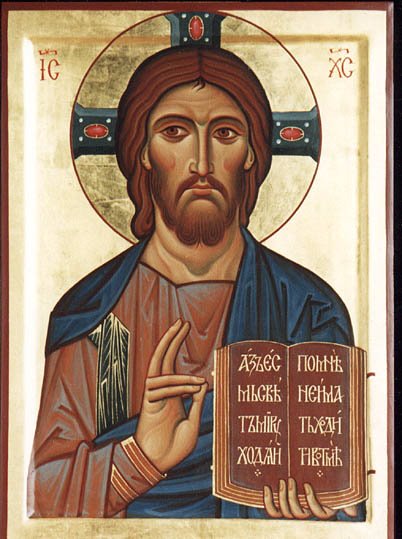
Sunday, April 7, 2013

Homily for Quasimodo Geniti (The Second Sunday of Easter)

Thomas

(Audio)

John 20:19-31; 1 John 5:4-10; Ezekiel 37:1-14

In the Name of the Father and of the + Son and of the Holy Spirit.

The Second Sunday of Easter is a very fleshy Sunday. It’s all about the body of flesh – sinews and muscles, bone and skin; touching, handling, seeing, and believing; breath and spirit – life. Christ is risen! He is risen indeed! Alleluia! And so, we have the repeat of a reading heard at the Easter Vigil, Ezekiel prophesying to a valley of dry bones. And, by the Word of the Lord and His Spirit-breath they are enlivened, a remembrance of the creation of man on the sixth day and a foretaste of the resurrection of all flesh on the Last Day – “Behold, I will open your graves and raise you from your graves, O my people. […] And I will put my Spirit within you, and you shall live.”

Jesus Christ is risen from the dead, the firstfruits of those who fall asleep. He was raised in His flesh and blood body – the same flesh and blood with which He enclosed Himself in the incarnation in the womb of the Virgin Mary by the creative Word and Spirit of God, now glorified, passing through walls and doors, appearing and disappearing at will, yet still His body, recognizable by the wounds of His sacrifice, now appearing as glorious scars.

This was the body He presented the evening of that first Easter Sunday to His disciples huddled in fear behind closed doors. He “came and stood among them and said to them, ‘Peace be with you’.” And then He showed them His wounds, His hands and His side. “Then the disciples were glad when they saw the Lord.” First, He proclaimed to them His Word, “Peace be with you.” Then he showed them the sign of that peace, His wounds. The sign strengthened and reinforced their faith so that they were glad when they saw their Lord. He spoke His peace to them again and He ordained them by breathing His Spirit upon them with His Word, “Receive the Holy Spirit. If you forgive the sins of any, they are forgiven them; if you withhold forgiveness from any, it is withheld.”

But, Thomas wasn’t there. So the disciples went and found him. And, filled with Christ’s Holy Spirit, now set apart for the preaching of the Gospel and the administration of the Sacraments, they told him, “We have seen the Lord.” But, Thomas wouldn’t believe them. He insisted, “Unless I see in His hands the mark of the nails, and place my finger into the mark of the nails, and place my hand into His side, I will never believe.”

Thomas should have believed the Word of the Apostles, of whom Christ promised, “He who hears you hears me.” But He didn’t. He needed more. We all do, and God knows this. Therefore He graciously provides us seeable, touchable, tasteable signs to strengthen and reinforce the faith of His people. Though His Word of grace is sufficient, He graciously gives you even more that you may believe and have life in His Name. Still He sends His Apostles, His pastors and undershepherds to proclaim His Word of grace and to show you His holy wounds, His blessed sacraments, Holy Baptism, Holy Absolution, and Holy Supper, that you may believe and have life in His Name.

Eight days later, on the next Sunday, again Jesus appeared to His disciples, this time Thomas being with them. He said to Thomas, “Put your finger here, and see my hands; and put out your hand, and place it in my side. Do not disbelieve, but believe.” Theologians have disagreed whether Thomas touched the Lord or not. Some have maintained that the text does not expressly say that Thomas touched and that it was likely sufficient that he saw – “Seeing is believing.” However, I am inclined to believe that Thomas in fact did touch Jesus’ wounds. After all, this was the invitation and command of His Lord who, by His Word alone spoke the stars into existence and commanded Lazarus to rise up from death and leave the tomb. Moreover, the Lord would not have you merely see and adore His body and His blood, but invites and commands you to take and eat, to touch and to handle, for the forgiveness of your sins, the strengthening of your faith, life, and eternal salvation.

Thomas’ response to this enfleshed Word of grace from Jesus was a confession even more profound that that of Peter, “My Lord and my God!” There was no doubt for Thomas any longer. He had the Word and He had the flesh – He had Jesus, His Lord and His God. And so do you! Jesus asked Thomas, “Have you believed because you have seen me? Blessed are those who have not seen and yet have believed.” That is you! You are those who have not seen, not in the way that Thomas and the other Apostles saw, and yet you believe. And to strengthen and reinforce your faith in His Word, Jesus gives you His body and blood that you may touch and handle, taste, and believe, and have life in His Name. In truth, you have something greater than the disciples who ate and drank with their Lord, for you eat and drink your Lord’s body and blood and share communion in and with Him. You couldn’t be any closer to Him than you will be when He raises your body from the dead to commune with Him in heaven.

The resurrection of our Lord has changed everything! The stone has been rolled away from the tomb, never to hold you in death again. His is not there! Why do you seek the living among the dead? Jesus is not in the tomb. His body does not lie in the grave. He is not there, but He is here – in living Word, living water, living flesh, and living blood – for you. He is here, now, for you, that you, blessed of the Father, may hear and believe and have life in His Name. He is here, for you, now, that you, O Thomas, may touch, handle, taste, see, and believe, “My Lord, and my God!”

In the + Name of the Father and of the Son and of the Holy Spirit. Amen.

Sunday, March 31, 2013

Homily for the Feast of the Resurrection of Our Lord (Easter Sunday)

Resurrection Icon

(Audio)

Mark 16:1-8; 1 Corinthians 5:6-8; Job 19:23-27

In the Name of the Father and of the + Son and of the Holy Spirit.

The traditional Gospel lesson appointed for the Feast of the Resurrection of Our Lord, St. Mark 16:1-8, has been read aloud in Christian congregations since at least the seventh century. However, it may seem an unusual selection as it records no appearance of our resurrected Lord and it ends on the rather down and uncertain note that the women who heard the proclamation of Jesus’ resurrection “said nothing to anyone, for they were afraid.” Therefore, let us see today if we can unpack the wisdom of the Church in selecting the lessons you have heard today on this most joyous and festive of days in the Church’s Year of Grace.

First, you must note that the Mary Magdalene, Mary the mother of James, and Salome were not going to the tomb because of their belief in Jesus’ Word that He would rise again on the third day, but they were going to finish the preparations for His burial that they left incomplete when the sun set on Friday beginning the Sabbath. They were going to embalm a lifeless body. They had no expectation that they would not find it in the tomb, let alone that their Lord had risen from the dead.

Additionally, they were concerned about something else: the very large and extremely heavy stone that blocked the way in and out of the tomb. However, as they approached the tomb, fully immersed in their anxiety over the stone, looking up, they saw that the stone had been rolled back. Wholly apart from their faith or fear, or anything at all, their problem had been solved.

While that was a real stone, rolled away from a real tomb, in which Jesus’ dead body really laid, in which His really alive body laid no longer, that stone holds a symbolic meaning for you as well. It symbolizes your doubts and fears, your sins and idols, anything that keeps you in the tomb of unbelief, sin, and death. As for the fretting women that first Lord’s Day, your stone has been rolled away too. Wholly apart from your faith or fear, or anything at all, your problem has been solved.

Likewise, St. Paul exhorts you to “cleanse out the old leaven” in your hearts, the “leaven of malice and evil”, that you may be a new lump. That is to say, whatever it is that gets in between you and God, cut it out, cast it out, purge it out, for even a little leaven leavens the whole lump. What stone keeps you from truly living resurrected lives? What leaven keeps you anxious and fearful so that you do not fully believe in the Words of Jesus and the fact that He is risen, just as He said?

You have the confession of Job as an example of the kind of confidence and life that can be yours through faith in the Word of God, that He keeps His promise. In the midst of horrific suffering and loss, over 1,500 years before the birth of Jesus, Job confessed His unwavering faith in the Word of the Lord saying, “I know that my Redeemer lives, and at the last He will stand upon the earth.” Job confessed his faith in the Word of the Lord and counted it as an accomplished fact that his Redeemer already lived, resurrected from the dead, and that, on the Last Day, his own destroyed flesh would be raised and he would behold his God with his own eyes.

Now that’s faith, to be sure! However, it was not faith unique to Job, for the same faith was shared by Abraham and Mary, the mother of our Lord, and many others. However, both the Marys and Salome that first Lord’s Day struggled to believe. Though their Lord had truly risen, just as He had said, they were still in their tombs, though the stone of sin and death had been rolled away for them too.

The faith of Abraham, Job, and Mary is available for you as well, for the stone of unbelief, sin, and death has been rolled away from your tombs. Jesus has called you to life and faith just as He called Lazarus from his tomb by the power of His life-giving Word. You are risen! You are risen indeed! Alleluia! You have been raised from death to new life, to live free and without fear, anxiety, doubt, and unbelief – to live resurrected lives even now, here in the Valley of the Shadow of Death, until your Good Shepherd leads you at last through death into life that never ends in His Father’s house and kingdom. You can confess with Job, “I know that my Redeemer lives, and at the last He will stand upon the earth,” even as you face darkness, suffering, and even death. You can confess, you can speak and not remain silent in fear, even as did your Lord’s disciples by the end of that day, when they could not help but speak and testify of His resurrection, though it brought them ridicule, persecution, and ultimately death. For, this is the day that the Lord has made. Let us rejoice and be glad in it. It is the eternal day upon which the sun will never set, for Son of God has risen, the firstfruits of those who fall asleep in Him. The stone has been rolled away. Let us never succumb to the devil’s lie that it remains. Christ is risen! He is risen indeed! Alleluia! Let us go forth in peace.

In the + Name of Jesus. Amen.
Saturday, March 30, 2013

Homily for Holy Saturday–Vigil of Easter

Creation - 4th day

(Audio)

John 20:1-18; and the following Old Testament Accounts: The Flood; Israel’s Deliverance at the Red Sea; The Valley of Dry Bones; Jonah Preaches to Nineveh; The Fiery Furnace

In the Name of the Father and of the + Son and of the Holy Spirit.

The mighty works of God are done in and through and to the darkness, in the shadow of night, obscured by cloud. This is not because God is darkness or shadow or cloud – “God is light, and in Him is no darkness at all” – but, these elements of darkness are chaos, the abyss, the dwelling place of Leviathan, evil, the devil and the fallen angels. These God overshadows and brings into order by means of His creative Word, which is Light.

In the beginning, God created the heavens and the earth. He brought order to chaos and spoke Light into the darkness. The darkness fled before the Light of God, for wherever the Light shines, there is no darkness at all. In this way, the darkness of chaos, evil, and the devil is controlled by God, used by God against its own fallen will, for the good that God determines. For, the devil is God’s devil, and is only able to accomplish that which the Lord permits.

Yet, darkness fills not only the vacuum of space and the heart and mind of evil, but also the hearts and minds of men. By the time of the generation of Noah, God “saw that the wickedness of man was great in the earth, and that every intention of the thoughts of his heart was only evil continually.” Therefore God cleansed the earth with water that the race of men might once again multiply on the earth, subdue it, and have dominion over it, beginning with eight souls who were not so completely closed to the Light of His Word. Noah and his family were blameless in the sight of God, not because they were blameless, but because God knew their faith and counted them as blameless. Therefore He saved them by the washing of the flood – the same flood that drowned and killed the wicked and unrepentant.

Darkness was also made manifest in the nations of men, none more than Egypt under Pharaoh. The Egyptians worshipped the Sun God Ra, whom they falsely believed to be the source of light, and thus they were a people of darkness. The land of Egypt and its Pharaoh came to symbolize hell and Satan which keep the children of God in bondage and slavery. Therefore, through His servant Moses, God lead His people out of bondage and captivity through the Red Sea on dry land while closing the waters upon the wicked Egyptians. Both this washing and the washing of Noah’s flood, the inspired writers of the New Testament teach refer to the washing and the rebirth of Holy Baptism, wherein God’s Word of Light releases us from the devil’s bondage and raises us in new birth as children of the Light.

Ezekiel witnessed a prophetic vision of the power of God’s creative Word of Light over the forces of darkness and death as he prophesied God’s Word, breathing His life into a valley filled with dry bones. Though they were seemingly defeated, dead, and scattered to and fro, God’s Spirit gathered and assembled them, raising them to life, a great and vast army of Light. Likewise, Jonah too witnessed the power of God’s creative Word of Light in turning the men of wicked Nineveh to faith in God even though he resisted and would not have mercy on them himself. And, when refusal to bow to the darkness of idolatry caused Shadrach, Meshach, and Abednego to be cast bound into a fiery furnace, the Word of God protected them from the fires of darkness.

Indeed, the mighty works of God are done in and through and to the darkness, in the shadow of night, obscured by cloud. And, this is the night in which our Lord Jesus passed over from death to life. This is the night when Jesus, the New Moses, lead God’s people out of the darkness of bondage and captivity to sin, death, and Satan by means of the cross. This is the night in which God’s Passover Lamb was raised victorious over these enemies, still bearing the wounds of His sacrificial suffering and death, now as glorious scars and holy wounds. This is the night of the New Creation, when once again Light penetrated and chased back the darkness – Jesus Christ, the Light of the World, the Light no darkness can overcome. Alleluia! Christ is risen! He is risen indeed! Alleluia!

At one time you were darkness, but now you are light in the Lord; walk, therefore, as children of the Light.

In the + Name of Jesus. Amen.

Friday, March 29, 2013

Homily for Good Friday

cranach_weimar1545

(Audio)

John 18:1 – 19:42; 2 Corinthians 5:14-21; Isaiah 52:13 – 53:12

In the Name of the Father and of the + Son and of the Holy Spirit.

Your Lord Jesus Christ “came not to be served but to serve, and to give His life as a ransom for many.” He is the Lamb of God’s self-offering who willingly suffered the horns of His strength to be caught up in the thorns of your sin and took your place upon the sacrificial altar that He would be consumed by the Father’s righteous wrath. He drank that cup, undiluted, to the bitter dregs so that it was finished, it is finished, there is nothing left, but the Father’s wrath is dried up, it’s fire is extinguished, “that whoever believes in Him should not perish but have eternal life.”

For, this is the way in which God so loved the world: He gave His only Son. And, the Son of God went willingly, because He is the love of God incarnate. For, God is love. And, love suffered, died, and was buried because there is no greater love possible than that a man lay down his life for his friends. He has “borne our griefs and carried our sorrows.” “He was wounded for our transgressions; He was crushed for our iniquities; upon Him was the chastisement that brought us peace, and with His stripes we are healed.” All this He willingly suffered out of love for His Father and love for you.

You were the object of that love, and now your are the fruit of that love. For, you were born again, born anew from the side of Jesus on the cross. The water and the blood that flowed from Jesus’ pierced side are your new life. You are born out of His side through means of Holy Baptism like a new Eve and Bride brought forth from the side of the New Adam and Bridegroom Jesus. For, you have been baptized into Jesus’ death and buried with Him. And, if you have been united with Him in His death, you are also united with Him in His resurrection that you might walk in newness of life.

But, what does that newness of life look like? How then does the Bride of Christ appear and act and live? How do you as members of Christ’s body live Christ’s life in the world while remaining not of the world? The Prophet Isaiah described Jesus as the Suffering Servant saying, “He had no form or majesty that we should look at Him, and no beauty that we should desire Him. He was despised and rejected by men; a man of sorrows, and acquainted with grief; and as one from whom men hide their faces He was despised, and we esteemed Him not.” As I read and pondered these words of the Prophet Isaiah this week, I could not help but think that, while they properly and prophetically describe our Lord Jesus in His humiliation and suffering, they are also descriptive of Christ’s Bride, the Church, bone of His bone, and flesh of His flesh.

For, indeed, there have been many times throughout Her history that the Church has been despised and rejected by men, ridiculed, mocked, and hated, and has suffered persecution. And, when this has occurred as the result of Her faithfulness to Her Lord and His Word, then She has served as a light in the darkness of sin and death and as leaven and salt in this world to the glory of God. In fact, often when the Church has suffered persecution, She has been blessed with new life and growth as the early Church Father Tertullian wrote saying, “The blood of the martyrs is the seed of the Church.” For, just as it was the Father’s will to crush His Son so that He might be a grain of wheat planted in the earth that dies and bears a harvest a hundredfold, so too does the Church bear witness to the love, mercy, and forgiveness of God by serving, and not being served, even unto death for the life of the world.

However, suffering will come of its own accord, in response to faithfulness to the Lord and His Word. Therefore, the Church, nor any of Her members, need not seek it out, for it will readily come upon you. Moreover, you, O Christian, cannot choose the crosses that you will bear, but the Lord has chosen them for you, that your strength to persevere will be in Him alone who has suffered all for you. For, truth be told, too often, rather than the radiant Bride that Her Bridegroom Jesus has called Her, and made Her, to be, too often the Church wears the costume of, and exhibits Herself like unto, the Whore of Babylon, inviting and provoking the mocking, the jeers, and the hatred of the world, not because of Her humility and selflessness, but because She is pompous and proud, self-righteous, uncharitable, unmerciful, and unforgiving. Instead of bearing the griefs and sorrows of this fallen and sinful world, too often She has courted favor with Caesar and put Her trust in the laws of men, wielding them like a weapon upon the weakest and the poorest of men. Indeed, the Church is continually tempted to wield both the swords of spiritual authority and of political authority as She once did in Rome before the Reformation.

However, the Prophet’s words describe Jesus in His humility and lowliness as our Suffering Servant and as God’s sacrificial Lamb who takes away the sin of the world. And, if these words also describe Christ’s Church, and they do, then they describe Her in Her Lord Jesus Christ, with His life, His love, His mercy, His charity, and His forgiveness flowing from Him through the Church, making Her a beacon light of hope in this world of darkness, sin, and death.

For, God has so loved you, and He has loved you in this way: He sent His only Son to willingly suffer and die on the cross in selfless, sacrificial service to you, so that the love of Christ now controls you, because you have concluded this: that one has died for all, therefore all have died; and He died for all, that those who live might no longer live for themselves but for Him who for their sake died and was raised. Through Jesus’ suffering and death, God has reconciled you to Himself. Therefore, He has given you the ministry of reconciliation, that is, the service of making others right with God through Jesus Christ. And yet, this service of reconciliation is not your work, but it is God’s work in Christ through you. For, you serve with His service. You love with His love. You bear with others in His patience. You forgive others with His forgiveness, regarding no one according the flesh, but all as sons and daughters of God, redeemed in the precious, holy, innocent shed blood of Jesus Christ.

In this way you fulfill your calling for which you were made, for which you were born again from the side of the New Adam, Jesus Christ, in water and blood, filled with His Spirit. For, you are His helpmate, His Bride, His New Eve, the Church, the mother of all the living, to the glory of God. For, there is salvation in no one else but Christ, and there is no salvation outside of the Church which is His body. Therefore, as Christ suffered and died to reconcile you with God, so has He made you ambassadors for Christ that you may die to your self and serve others, exhorting them to be reconciled to the God who has loved them to the end in His Son. For, the message of reconciliation is this: Christ has died; and Christ has risen. God “has made Him to be sin who knew no sin, so that in Him we might become the righteousness of God.”

In the + Name of Jesus. Amen.

Thursday, March 28, 2013

Homily for Holy (Maundy) Thursday

Holy Thursday - foot washing

(Audio)

John 13:1-15, 34-35; 1 Corinthians 11:23-32; Exodus 12:1-14

In the Name of the Father and of the + Son and of the Holy Spirit.

Why is it that Christ’s Church is certain to be full on Christmas and Easter, but much less than full on the other fifty Sundays of each year? Is it not because, in general, people do not feel a deep down need for God’s Word and Sacraments? I mean a true need, a hunger and thirst, a desire to be filled with God’s good gifts in Jesus Christ. For, surely a person that is hungry will seek out food to eat and be satisfied, a person who is thirsty will seek out drink, and a person who feels a need for God and His good gifts will readily seek them and will not stop until he is sated. Therefore, I suspect that many people simply do not feel such a need.

But then, why do they come on Christmas and Easter, or Mother’s Day, for that matter? If they are not coming because of their need, then why do they come? Perhaps they come simply because it is what you’re supposed to do. Perhaps they come because they believe that they should honor God with their presence at least once or twice a year. Perhaps they come because they believe that doing so is sufficient, that so long as they show up on Christmas and Easter they have done what is necessary to merit God’s approval. Either way, if you are not coming out of your need for God and His good gifts, because of what God is doing for you and giving to you, then you must be coming because of what you believe you are doing and giving. Dear Christian, may the Holy Spirit of God convict you to see the folly in such thinking.

Worship, the Divine Service, or Gottesdienst as our Lutheran forebears called it, “God’s Service”, is first and foremost God’s selfless, sacrificial service to you apart from, before, and throughout your response of praise, thanksgiving, and selfless, sacrificial service to your neighbor. God descends to you, who cannot ascend to Him. He washes you clean with Jesus’ innocent shed blood and raises you from death to life. He clothes you in Jesus’ righteousness, adopts you as His sons, and feeds and nourishes you with His Word and the holy Wounds of His Son. He fills you with Himself, from whose love, mercy, grace, compassion, and forgiveness springs forth in and out of us praise, thanksgiving, and a desire to love one another as you have been loved by God in Jesus Christ.

On that frightful night of the Plague of the Firstborn, it was God’s service, God’s Word, that marked and protected the Jewish faithful so that the Angel of Death would pass over their homes and spare their firstborn. He instructed them to slaughter an unblemished lamb at twilight and to mark the lintels and doorposts of their homes with its blood. Then they were to roast it and eat its flesh with unleavened bread and bitter herbs. Anything remaining after the household had eaten was to be burned in fire. Now, there was nothing special about these sacrificial lambs. Their blood had no power to atone for sin or keep death at bay. But, it was the Word of God, which He attached to the lamb, to the blood, and to the ceremonial action that gave it the power of a sacrament. It was God’s service, God’s Word, God’s action from the mercy, love, and compassion of our heavenly Father, which redeemed the Hebrew firstborn from death.

Likewise, on the night in which He was betrayed, before eating the Last Supper with His disciples, Jesus served them by washing their feet. This was not a mere cleansing of dirt from the body, but it was a sign, like the lamb’s blood marking the doors of the children of Israel, that God would do, that God was doing, all that was necessary to make men clean, righteous, and holy before Him, to be able to stand in His presence once again, more than that, to commune with Him, in Him, and truly live.

John preserves for you the protestation of Peter as catechesis in the objective nature of God’s service in making you clean. Peter was scandalized that Jesus, His Lord and Master, would condescend to wash his feet. He vehemently protested, “You shall never wash my feet.” But, Jesus explained to Peter saying, “What I am doing you do not understand now, but afterward you will understand,” and “If I do not wash you, you have no share with me.” Here Jesus teaches both the necessity and the benefit of His washing – being a part of Jesus, His body, in communion with Him. Of course, Peter, never tepid, but always hot or cold, is still confused and insists, “Lord, not my feet only but also my hands and my head!”

And, here, is displayed how it goes with you. For, you are Peter, vacillating in zealousness or apathy, adding to or subtracting from the Word of the Lord, while trusting in it not for the powerful, creative, true, and life-giving Word that it is. It is by Jesus’ washing you in His holy, innocent, shed blood that you are clean. This is both necessary and sufficient so that you need not do anything but receive it in faith. Surely that cannot be enough, you think. It can’t be that easy, you protest. But it is, because it’s all Jesus, all the time. He gives, you receive. It’s like having your feet washed. It’s like having the wind blow upon you. It’s like being born – pure passivity, pure reception, pure and holy grace.

However, as St. James teaches, the faith that is received by grace alone is never alone. Faith is proved by works. Therefore, James says, “Show me your faith apart from your works, and I will show you my faith by my works.” Thus, after washing His disciple’s feet – after cleansing them from their sins, purifying, and absolving them – Jesus taught them saying, “Do you understand what I have done to you? […] for I have given you an example, that you also should do just as I have done to you.” Then Jesus gave them a new commandment, a new mandate, after which this day is called Maundy Thursday, “Love one another: just as I have loved you, you also are to love one another.”

Now, perhaps you think this new commandment to be something too easy as well. In truth, it is easy, and it is also the most difficult thing to do imaginable. It is easy because it is with God’s love in Christ that you are to love others. That is what Jesus means by saying “as I have loved you” – you are to love with His love, the love you have received from him, which you are to show to others. For, you have no love of your own to give. God is love. God loves. And it is with God’s love in Jesus Christ that you love.

However, loving in this way is also the most difficult thing to do imaginable because this kind of love, God’s love in Christ, is boundlessly wide and immeasurably deep. Your personal well is not so wide and deep and, too often, is nearly bone dry. How then can you love as Jesus commands? By yourself, you simply can’t. First, you must be loved; you must receive Jesus’ love. You must stop doing and begin receiving. Stop trying to chase and grasp the wind, but permit the wind of God’s Holy Spirit to blow upon you through His Word. Stop trying to make yourself clean by your obedience, piety, and works of charity and mercy, and permit Jesus to wash you in His blood and make you clean. If He says that you are clean, then you are clean. Believe it, trust in it, cling to His Word of promise. And, stop striving to be born again by your decision and choice. You had no choice, you made no decision when you were born the first time; so it is that you do not choose or decide to be born again in the Spirit, but this is the work of the Holy Triune God alone. Stop, be still, receive, believe and be filled with Jesus. Then you will love with His love, and it will be easy, for it will flow out of you like an overflowing chalice into the lives of your brother, your neighbor, your friend, and your enemy.

This truth St. Paul speaks of saying, “For I received from the Lord what I also delivered to you….” Paul had nothing to offer to anyone other than what he himself had received. And, what had he received from the Lord? Particularly, in this passage, it was the Lord’s Supper, our Lord’s institution, which we remember and celebrate this night. The Lord’s Supper is a powerful sign of God’s love in Jesus Christ. While it’s power comes from His Word, in love God wraps His creative and life-giving Word in lowly bread and wine that you may handle it, eat it, and drink it, just as He once wrapped His creative and life-giving Word in human flesh, born of the Virgin Mary, to suffer and die with your sins, in your place, and to be raised to life that you might live with Him forever in His kingdom.

This is the feast of God’s love for you in Jesus Christ. Come and receive. Take, eat His body. Take, drink His blood. He is for you, the perfect and holiest of gifts. He will fill you with His love to the brim, and He will fill you to overflowing that you may truly love one another as He has loved you. His new commandment, His mandatum, is not a commandment of the Law, but it is fruit of the Gospel. He has perfectly loved you so that you may love one another, not perfectly, but with His perfect love. What you deliver to others is only that which you yourself have received.

In the + Name of Jesus. Amen.